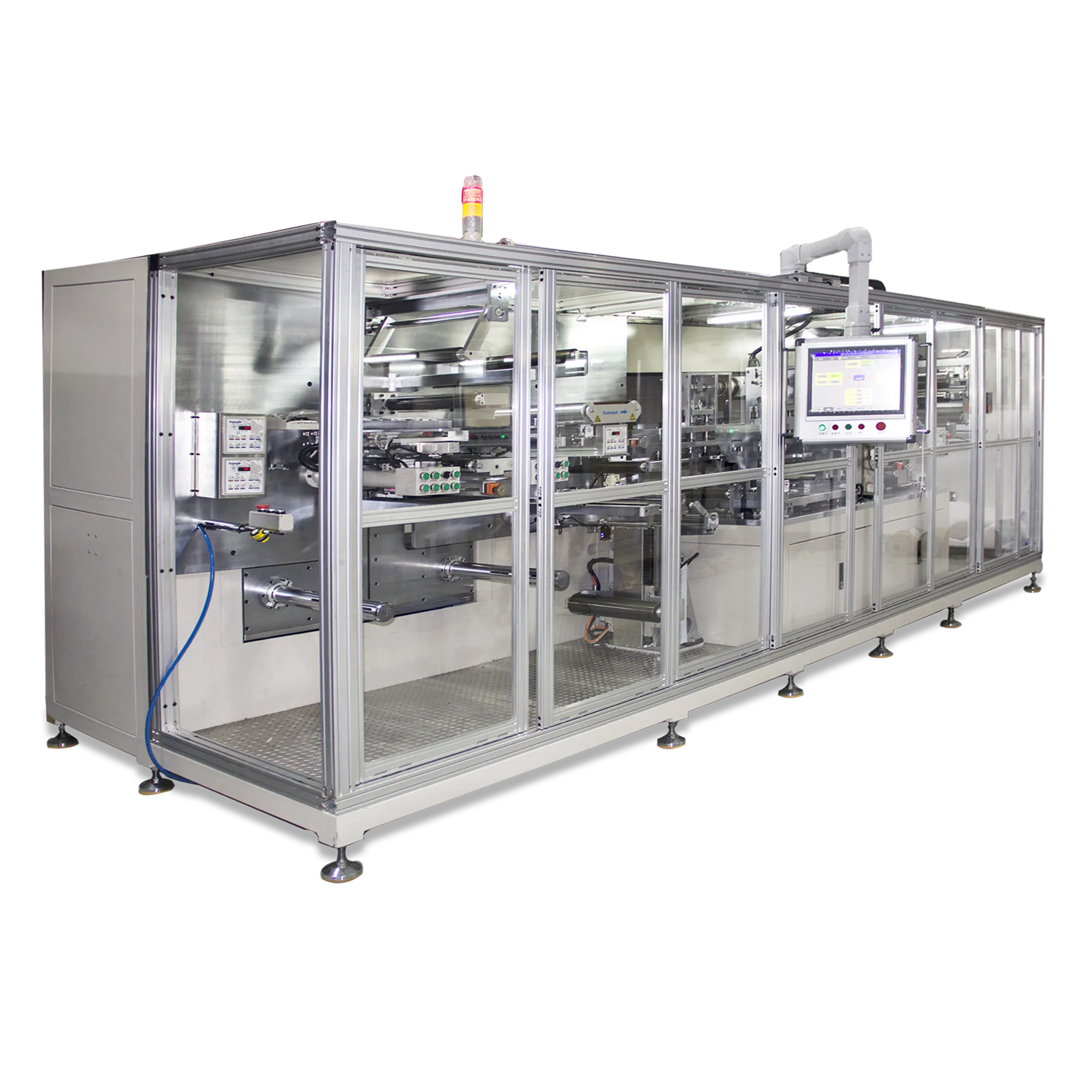
Multi-tabs Tool based Notching & Slitting Machine

USE CASES

Forms multi-tab electrode patterns through mechanical die-cutting while slitting the continuous web to production width in high-volume manufacturing.

Why this machine: For high-volume production with stable designs, laser systems can be over-specified. Die-cutting offers superior throughput and lower cost-per-cell while maintaining high repeatability.

Ideal User: High-volume manufacturers with mature, standardized tab designs (e.g., Power banks, standard smartphones).

When to choose: When cost-sensitivity and maximum throughput are the primary goals and the coating type does not require laser processing.Related Equipment: Multi-tabs laser notching & slitting machine for battery cells · Single-piece tool-based notching & cutting machine

 

Equipment Features

These features maintain mechanical die-forming stability during high-speed tabbing and slitting operations.

  • Dedicated mechanical structure for multi-tabs electrode forming
  • Integrated die-cutting and slitting architecture
  • Servo-driven tension control to prevent tab deformation
  • Multi-stage rectification for long-run stability
  • Dual-side tab forming capability
  • Targeted dust collection at cutting and slitting zones


Core Advantages: Die-Cutting vs. Laser Cutting

Die-Cutting (Hardware)

  • Mechanical Stability & Cost Efficiency: Ideal for standardized electrode designs with limited format variation, offering a mechanically stable and cost-effective solution.
  • Low Operational Variability: For long production runs, stable tab geometries, and a small number of electrode models, it eliminates frequent parameter tuning and format revalidation. Once tooling is finalized, production changeover time and operational variability are significantly reduced.
  • Predictable Costs: Requires lower initial equipment investment and delivers predictable operating costs when model diversity is limited.
  • Best For: Mature consumer electronics, light EV, and small energy storage applications where process stability, throughput consistency, and controlled manufacturing costs are primary objectives.

Laser Cutting

  • Material Integrity: Enables non-contact electrode processing, eliminating mechanical stress on thick or high-loading coatings. This is critical in EV and ESS electrode development, as preserving coating integrity directly impacts achievable energy density and cycle stability.
  • Design Flexibility: Removes mold dependency, allowing faster design iteration and format changes during R&D and pilot stages.
  • Future-Proofing: For manufacturers validating new chemistries or scaling large-format electrodes, it offers a future-proof path that balances precision, flexibility, and material utilization efficiency.
  • Best For: R&D, evolving designs, and high-flexibility applications requiring uncompromised material integrity.

Functions

This machine is designed for mechanical die-cutting and slitting of multi-tabs electrode rolls.

Its core functions include:

  • Automatic unwinding
  • Web deviation correction
  • Multi-tabs die-cutting
  • Mark hole punching
  • Integrated electrode slitting
  • Automatic rewinding or stacking
  • Optional optical inspection

Technical parameters

Die cutting form Coating continually and tab coming out from two sides
Machine production speed ≥60m/min
Die Life ≥10 million times
Burr size ≤15μm
Dust removal way Non-contact way
Dust removal size ≥5μm
Dust removal rate ≥95%
First-pass yield (FPY) ≥99.5%
Equipment utilization rate ≥98%
Equipment noise level ≤70db (1m outside the eqipment )
Equipment dimension (reference) 10000×2100×2600mm (LxWxH)


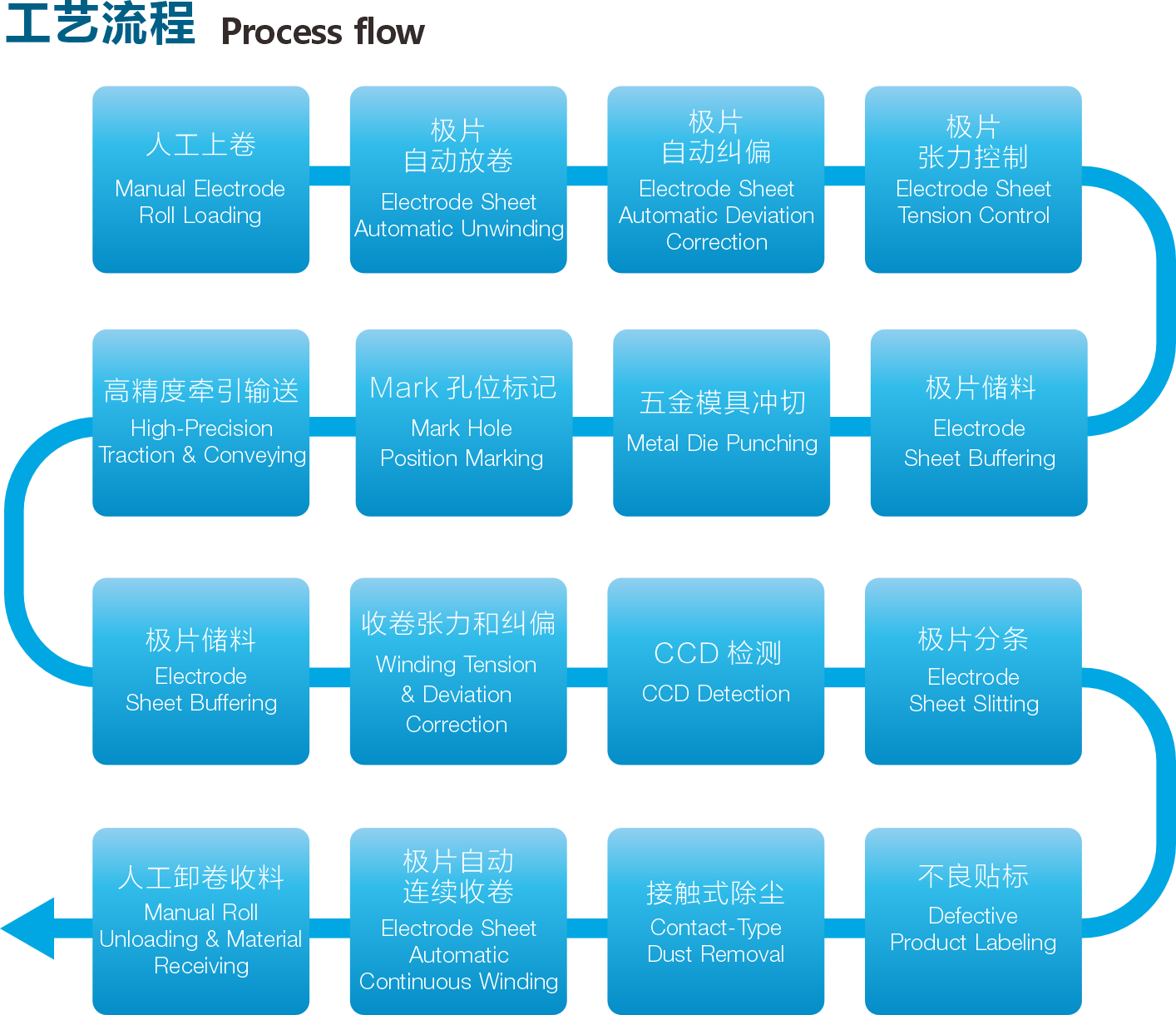
Process Flow

This section defines the position of the Multi-tabs Die-cutting & Slitting Machine in continuous electrode fabrication lines.
The process forms tab geometries and width-controlled sheets in a single operation before winding or stacking.

  1. Manual roll loading
  2. Automatic electrode unwinding
  3. Automatic electrode deviation correction
  4. Electrode tension control
  5. Electrode Sheet Buffering
  6. Metal Die Punching
  7. Mark Hole Position Marking
  8. High-Precision Traction & Conveying
  9. Electrode Sheet Buffering
  10. Winding Tension & Deviation Correction
  11. CCD Detection
  12. Electrode Sheet Slitting
  13. Defective Product Labeling
  14. Contact-Type Dust Removal
  15. Electrode Sheet Automatic Continuous Winding
  16. Manual Roll Unloading & Material Receiving


Packing & Delivery

Packaging focuses on die assemblies, slitting blades, and pressure-alignment components.

Innovation & Patents

This equipment incorporates the patented Dual-Mold Electrode Cutting Assembly, enabling simultaneous tab forming and width slitting within one mechanical cycle.

The dual-die synchronization eliminates secondary alignment steps required in conventional processing, improving positional consistency and sustaining high-throughput production of multi-tab electrodes.

→View Patent Certification

Certifications & Compliance

→ View Certifications & Compliance Details

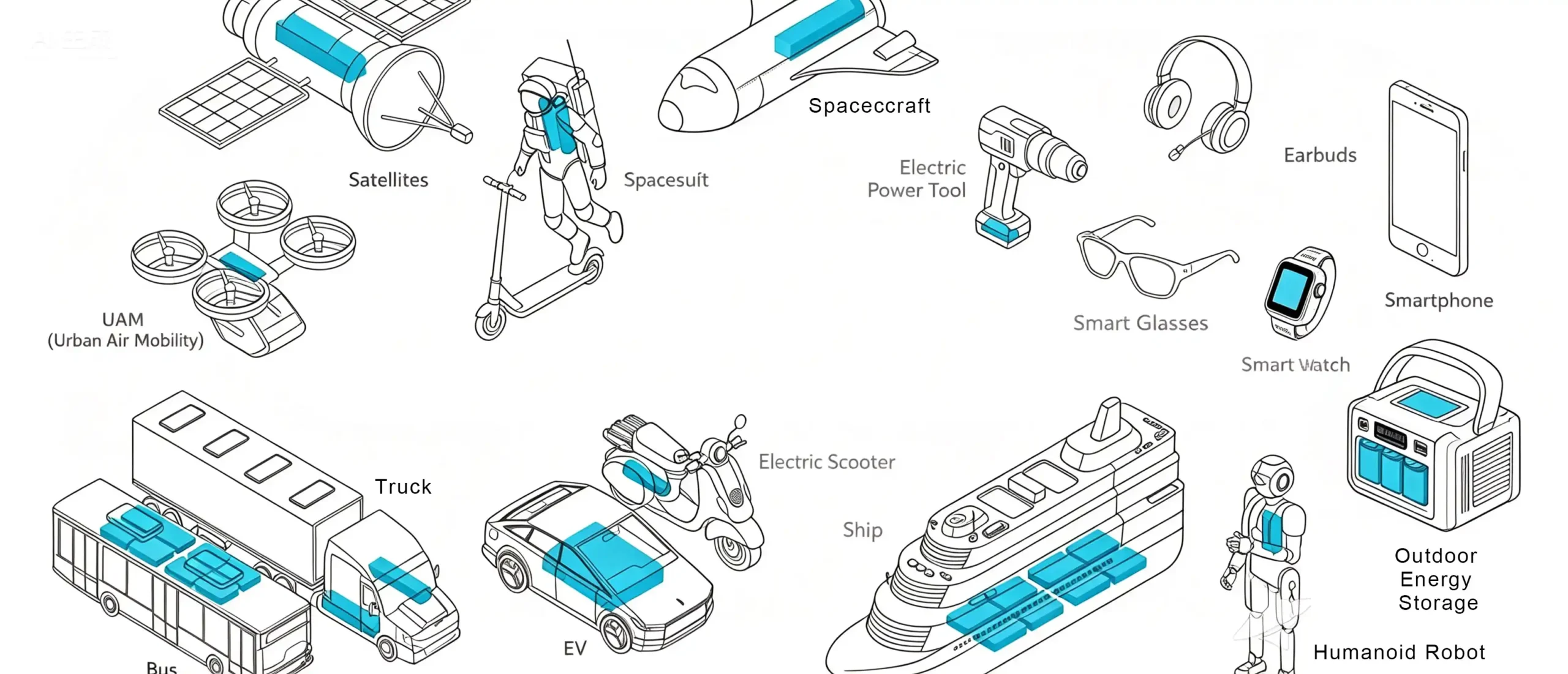
End Applications

Send Us a Message

Tell us about your project requirements, equipment needs, or technical questions. Our team will get back to you as soon as possible.