
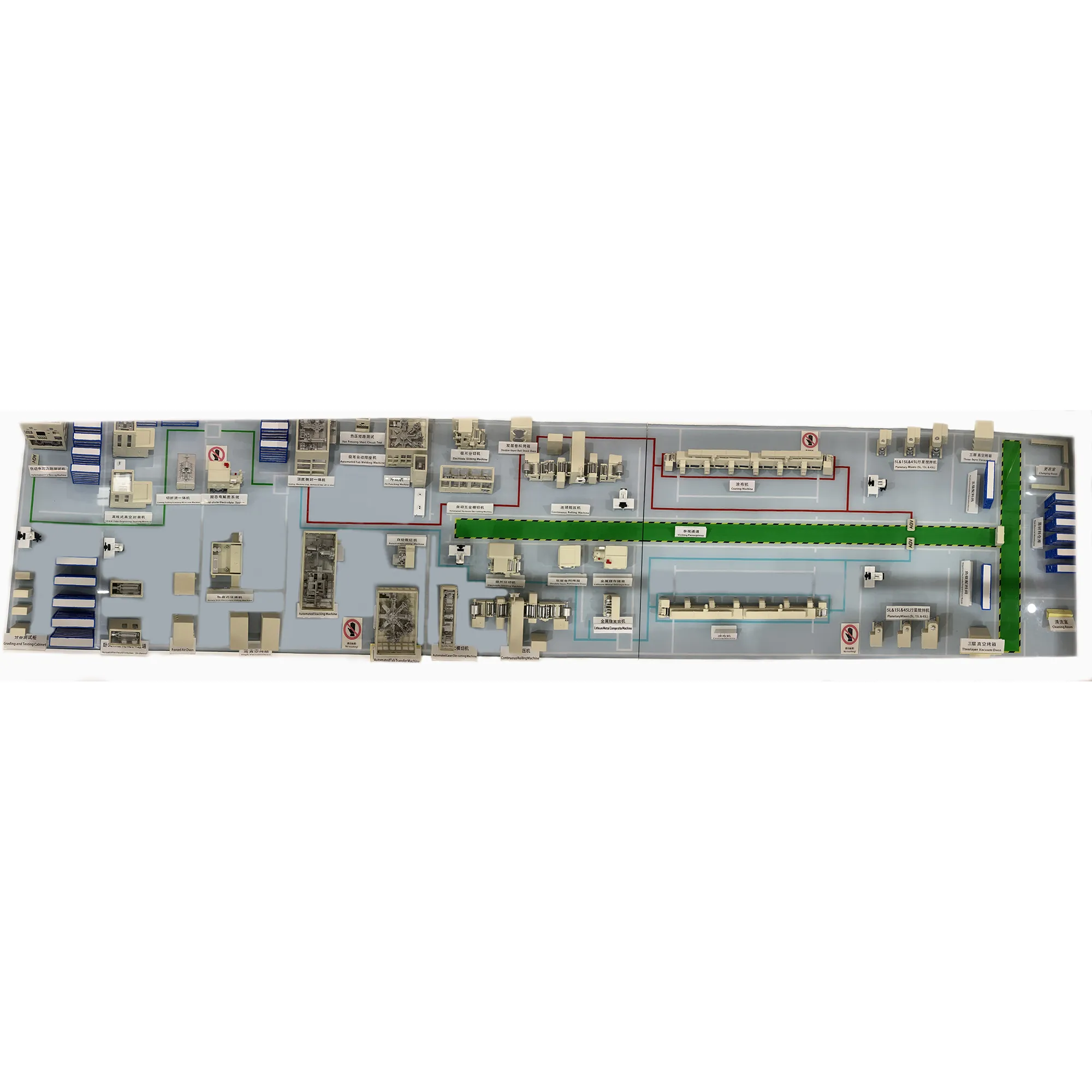
Provides an integrated pilot-scale workflow combining material preparation, layer assembly, and controlled consolidation for solid-state cell development.
Why this machine: Solid-state processes require specialized environment control (dry-room compatibility) and stacking/lamination pressures that liquid-cell lines cannot provide.
Ideal User: Research institutions, OEM innovation centers, and solid-state battery startups.
When to choose: When validating new material routes (sulfide/oxide) where flexibility is more important than mass-production speed.
Related Equipment: Dry processing modules · Hot press · Solid electrolyte preparation systems
These features provide controlled assembly pathways for multilayer solid-state structures under pilot-scale conditions.
This pilot line is designed for experimental assembly and validation of solid-state battery cells.
Its core functions include:
| Item | Description |
| Production Mode | Modular pilot-scale configuration for solid-state cell development |
| Compatible Electrolyte Systems | Polymer · Sulfide · Oxide (process-dependent setup) |
| Cell Format | Pouch-type solid-state cells (customizable dimensions) |
| Process Routing | Wet-transfer · Lamination · Dry-sheet stacking selectable |
| Stacking / Lamination Method | Pressure-assisted stacking or thermal lamination (material-driven) |
| Atmosphere Control | Glovebox / Dry-room integration available depending on chemistry sensitivity |
| Pressure Control Range | Adjustable according to interface densification requirements |
| Thermal Processing Capability | Configurable heating profiles for bonding and interface stabilization |
| Material Handling | Sheet-based or pre-formed layer handling supported |
| Data Acquisition | Pilot-scale traceability for process validation and parameter mapping |
| Line Architecture | Reconfigurable station layout for iterative R&D changes |
This section outlines the role of the Solid-State Battery Pilot Line as an integrated development platform.
Key processes including materials and electrolyte system preparation, electrode formation, stacking, welding, electrolyte filling, sealing, and final testing are seamlessly integrated to enable controlled, pilot-scale manufacturing of next-generation solid-state batteries. This adaptable process flow can be tailored to accommodate different technical pathways.
Packaging and delivery are organized by modular system shipment.
The Solid-State Battery Pilot Line is a modular process platform designed for laboratory-scale validation and pre-industrial development of polymer, sulfide, and oxide solid-state battery technologies.
Rather than targeting mass production, the system enables controlled evaluation of key manufacturing steps such as electrode preparation, layer stacking or lamination, interface formation, pressure-assisted assembly, and initial electrochemical testing within a single configurable environment. This allows researchers and process engineers to define viable process windows, material compatibility, and handling methods before scaling to industrial equipment.
Built on proven lithium-ion equipment architecture and adapted for solid-state materials, the pilot line provides the flexibility required for route comparison, parameter tuning, and repeatable small-batch builds, supporting the transition from experimental chemistry to manufacturable cell design.
It is typically deployed by R&D centers, advanced manufacturing teams, and materials developers seeking to translate solid-state concepts into scalable engineering workflows while reducing scale-up uncertainty.
Solid-state battery manufacturing does not follow a single standardized pathway. Different material systems require distinct handling approaches, such as wet-transfer coating, laminated composite structuring, or dry-sheet stacking with pressure-assisted consolidation.
The pilot line addresses this variability through modular stations, adjustable pressure and lamination schemes, and configurable material transfer methods that allow engineers to switch between process routes without redesigning the entire setup. This makes it possible to evaluate how each chemistry responds to real manufacturing conditions rather than isolated laboratory experiments.
Tell us about your project requirements, equipment needs, or technical questions. Our team will get back to you as soon as possible.