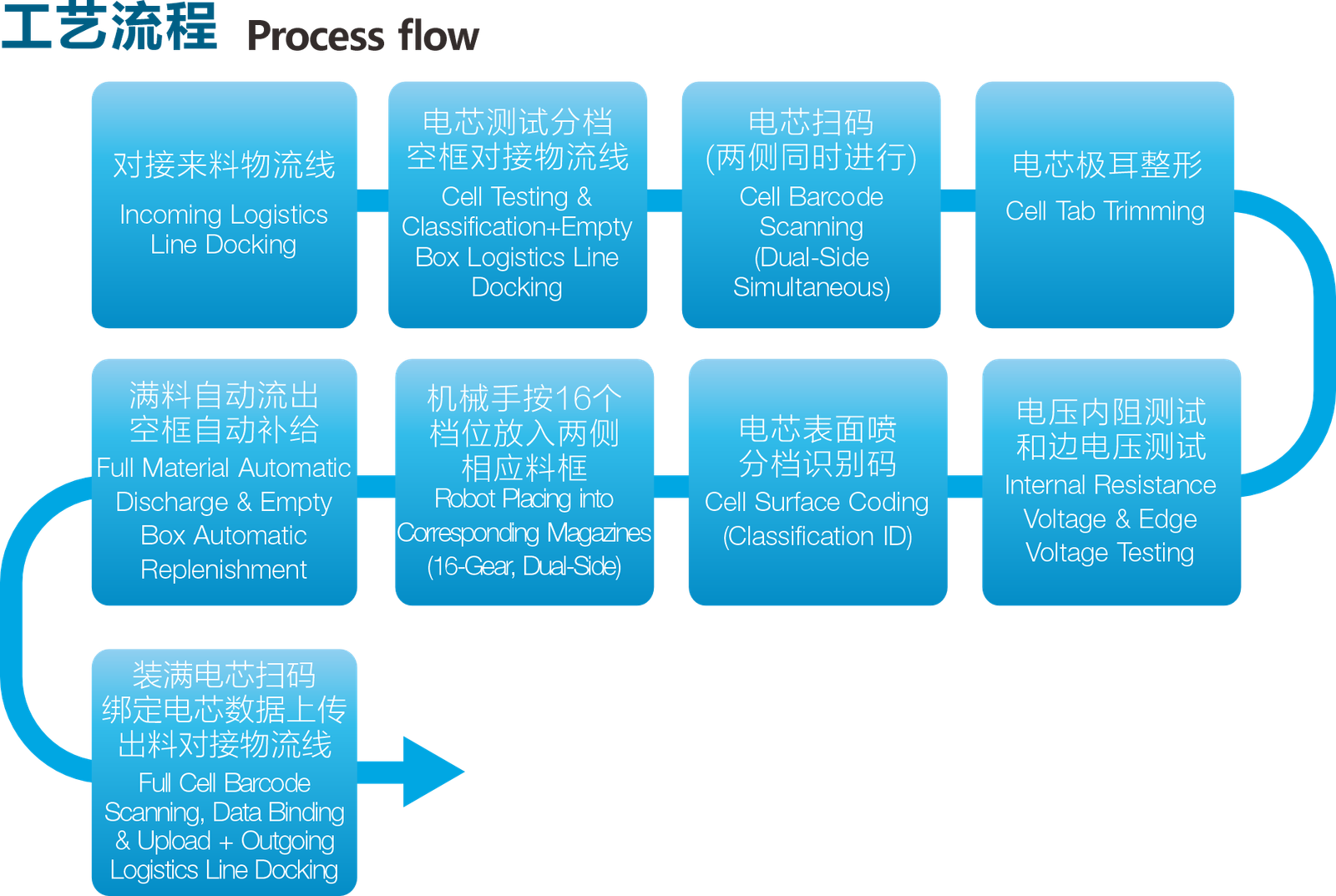
Classifies cells into matched performance groups based on measured electrical parameters for module assembly readiness.
Why this machine: EV modules require perfectly matched cells to prevent premature pack failure. Automation eliminates the human error and inefficiency of manual sorting.
Ideal User: EV module assembly plants and high-volume automotive lines.
When to choose: When module-level consistency is required and throughput is too high for manual handling.
Related Equipment: OCV testin machine . EV sealing machine . EV welding machine . EV filling machine . EV vacuum sealing machine

These features classify cells through parameter-based routing within automated grading sequences.
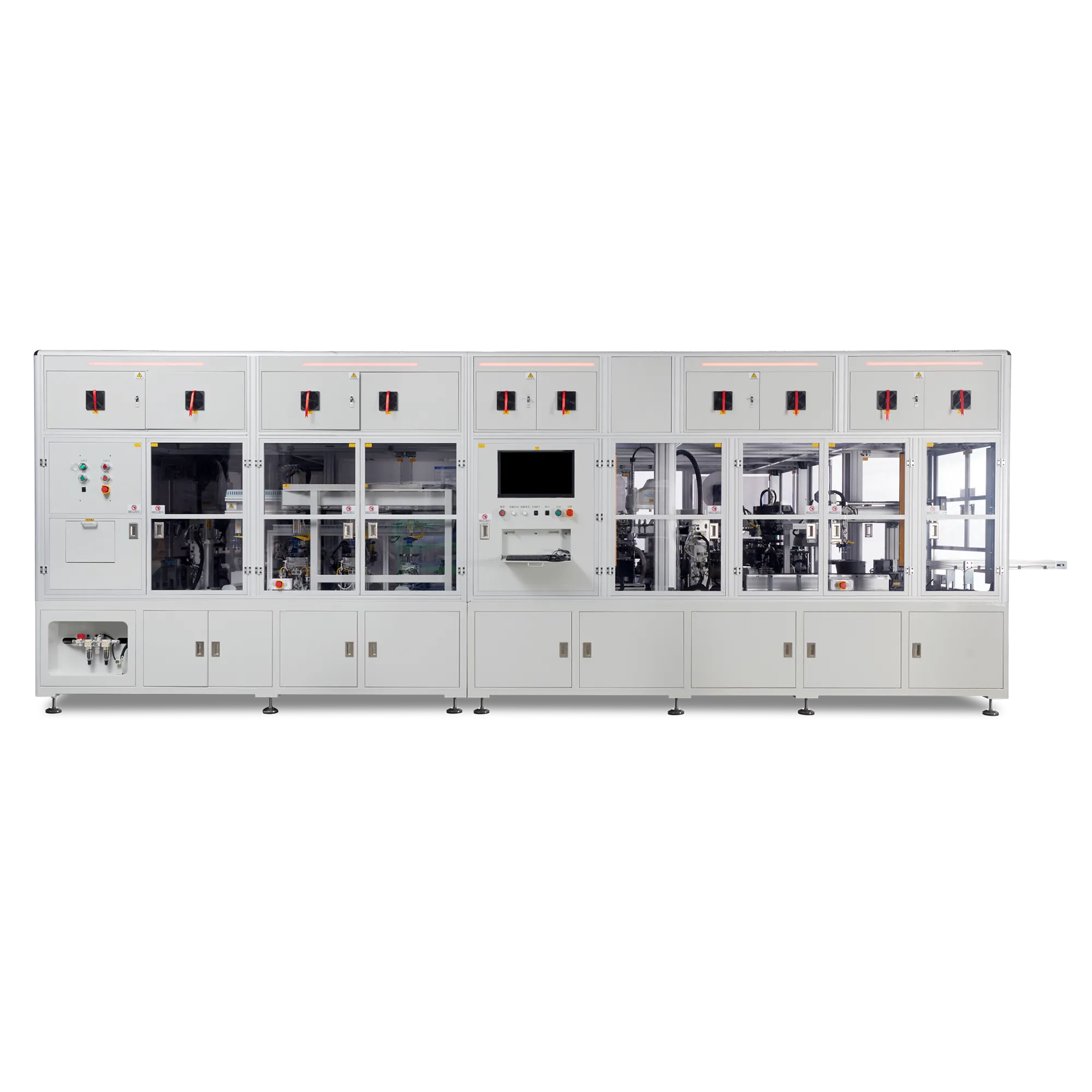
This machine is designed for sorting EV battery cells based on electrical parameters.
Its core functions include:
| Cell spec. (L) | 160-300mm |
| Cell spec. (W) | 110-250mm |
| Cell spec. (T) | 5-15mm |
| Production efficiency | 15ppm |
| Voltage & Internal resistance Meter accuracy | OCV ± 0.0015rdg. ± dgt
IMP ± 0.5rdg. ± 5dgt. |
| Voltage & Internal resistance Meter resolution | OCV 0.1mv
IMP 10uΩ |
| First-pass yield (FPY) | ≥99.9% |
| Utilization rate | 98% |
| Power | 60KW |
| Weight | 20T |
| Equipment dimension (reference) | 11500×2400×2500mm (LxWxH) |
This section describes the grading position within cell finishing operations. Measured cells are classified and grouped to support consistent module assembly.

Packaging focuses on sorting mechanisms and control systems.
The patented Non-contact Cleaning and Sorting System combines debris removal, inspection, and classification without mechanical contact.
It reduces contamination risk before downstream cell assembly or grouping.
Tell us about your project requirements, equipment needs, or technical questions. Our team will get back to you as soon as possible.